The empty sack
built for
your bagger.
You fill cement, mortar, render, adhesive, plaster or lime. We make the kraft sack that matches your machine, your weight and your brand.
01 The kraft cement sack Multi-ply kraft paper, pasted bottom, printed in your colours. From 25 to 35 kg.

Two sacks only.
Two ways to fill.

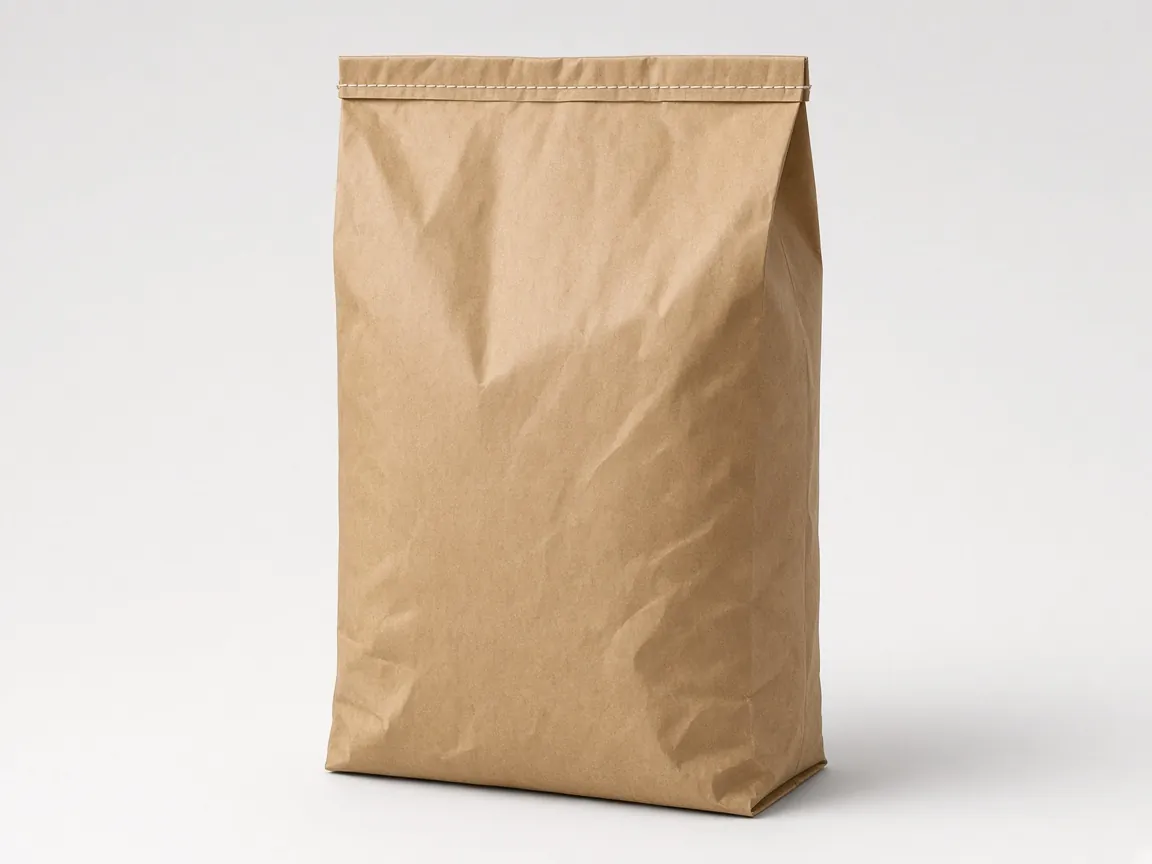
Both sacks are brown or white kraft. Printing is flexographic, priced on quote.
The difference is obvious.
On the left, the sack stays closed at the top: only the corner valve takes the powder. On the right, the top is open. Two types only.
Through the corner valve on the bagger
From the top, by gravity
No sewing: the valve closes after filling
At your plant: sewing, folding or pasting, to be defined
Cement, mortar, render, tile adhesive, plaster, lime
Aggregates, sand, cement without a valve machine (use to confirm)
25 or 35 kg most often; other weights on quote
On quote, by product and handling
2 to 6 kraft plies by weight
2 to 6 plies; count set after a trial
Ends pasted as a hexagonal bottom, ready to palletise
Pasted hexagonal bottom: flat base, the sack stands upright
Brown or white kraft, flexography
Brown or white kraft, flexography
For machine-filled cement, the valved sack remains the reference. For aggregates, a trial checks that the paper holds against angular grains.
Four valves, one for each machine type.
The green line shows the valve. Give us your bagger model and we choose with you.
-
Valve 01
Protected by copyright · Reproduction prohibited
Plain valve
An opening in the corner, with no sleeve.
-
Valve 02
Protected by copyright · Reproduction prohibited
Internal sleeve
The sleeve stays inside the sack.
-
Valve 03
Protected by copyright · Reproduction prohibited
External sleeve
The sleeve protrudes and folds back after filling.
-
Valve 04
Protected by copyright · Reproduction prohibited
Stepped PE sleeve
A PE sleeve in steps, matched to your closure.
From the line to the site
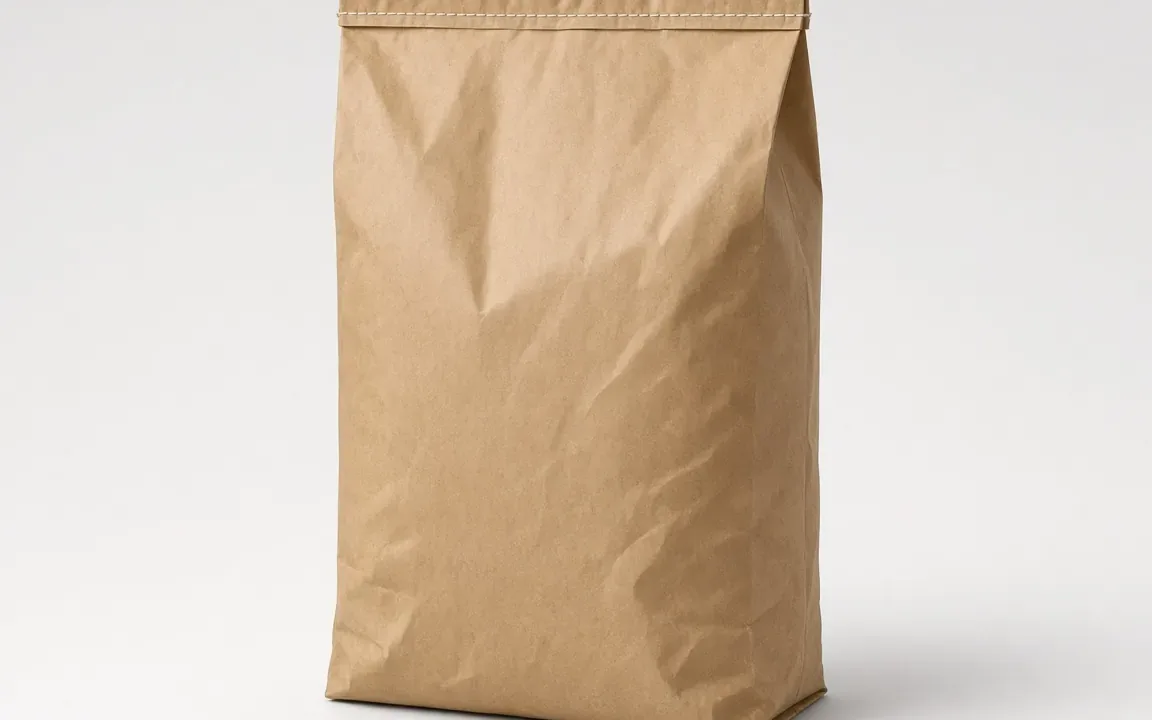
Three distinct steps: the bagging line, loading and delivery, then the pallet on site.


Fewer tears
at the plant
A well-sized sack and the right ply count cut line stops. Here is what we set with you.
- Plies matched to the weight. 2 to 6 kraft plies by product: enough strength, without useless bulk.
- Valve matched to the machine. A poorly chosen valve strains filling and weakens the corner.
- Pasted hexagonal bottom. The brick packs flat: fewer drops and less friction on the palletiser.
- Paper and liner. Brown or white kraft; optional HDPE liner against moisture.
Questions
asked often
Short answers before the quote.
What sack weights do you offer?
25 and 35 kg are the most common for cement and mortars. Another weight is priced on quote, by product and density.
Does the sack resist rain?
Not verified. An HDPE liner can protect the powder from moisture. Sacks should be stored under cover.
How do you choose the valve?
By bagger and powder fineness: plain, internal or external sleeve, or stepped PE. Tell us the machine model. See the valved sack →
Can aggregates be bagged?
Yes, preferably with the open-mouth sack. Kraft strength against the grains is confirmed by a trial. See the open-mouth sack →
Can you print our brand?
Yes: logo and wording on brown or white kraft, by flexography. Colour count is set on quote.
Is there a third sack type?
No. Two types only: valve or open mouth. The pasted hexagonal bottom is a shared feature, not a separate model.
Request a quote:
Have a question about a size, printing or lead time? Write to us and we’ll get back to you quickly.
Get in touch:
Phone
09 50 75 81 38 (local call rate)
Address
CBS Emballages
155, rue du Faubourg Saint-Denis
75010 Paris